

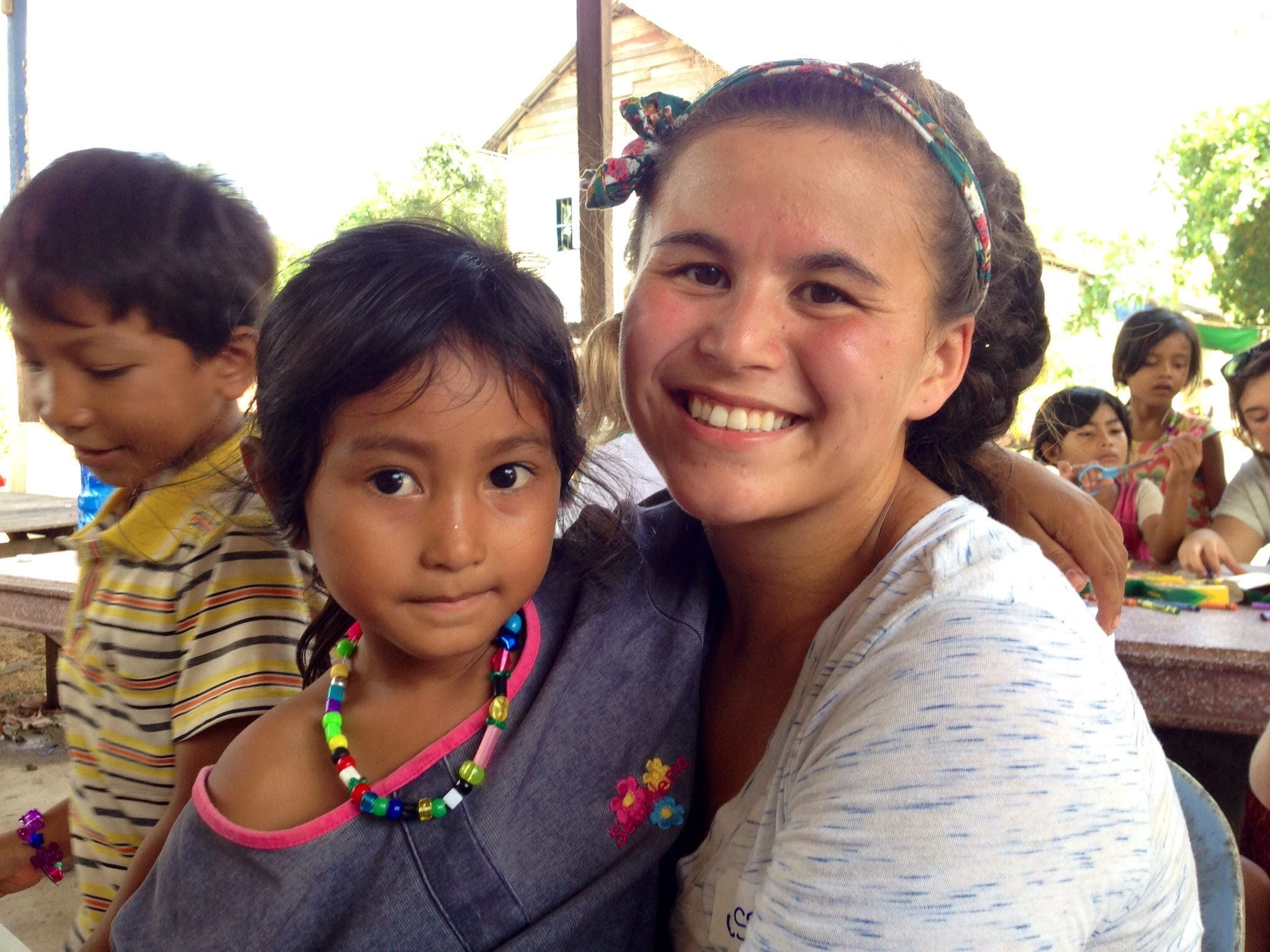
In 2014, I traveled to Cambodia. I thought I was stepping into a world completely unlike my own, but what struck me most was how familiar it felt.
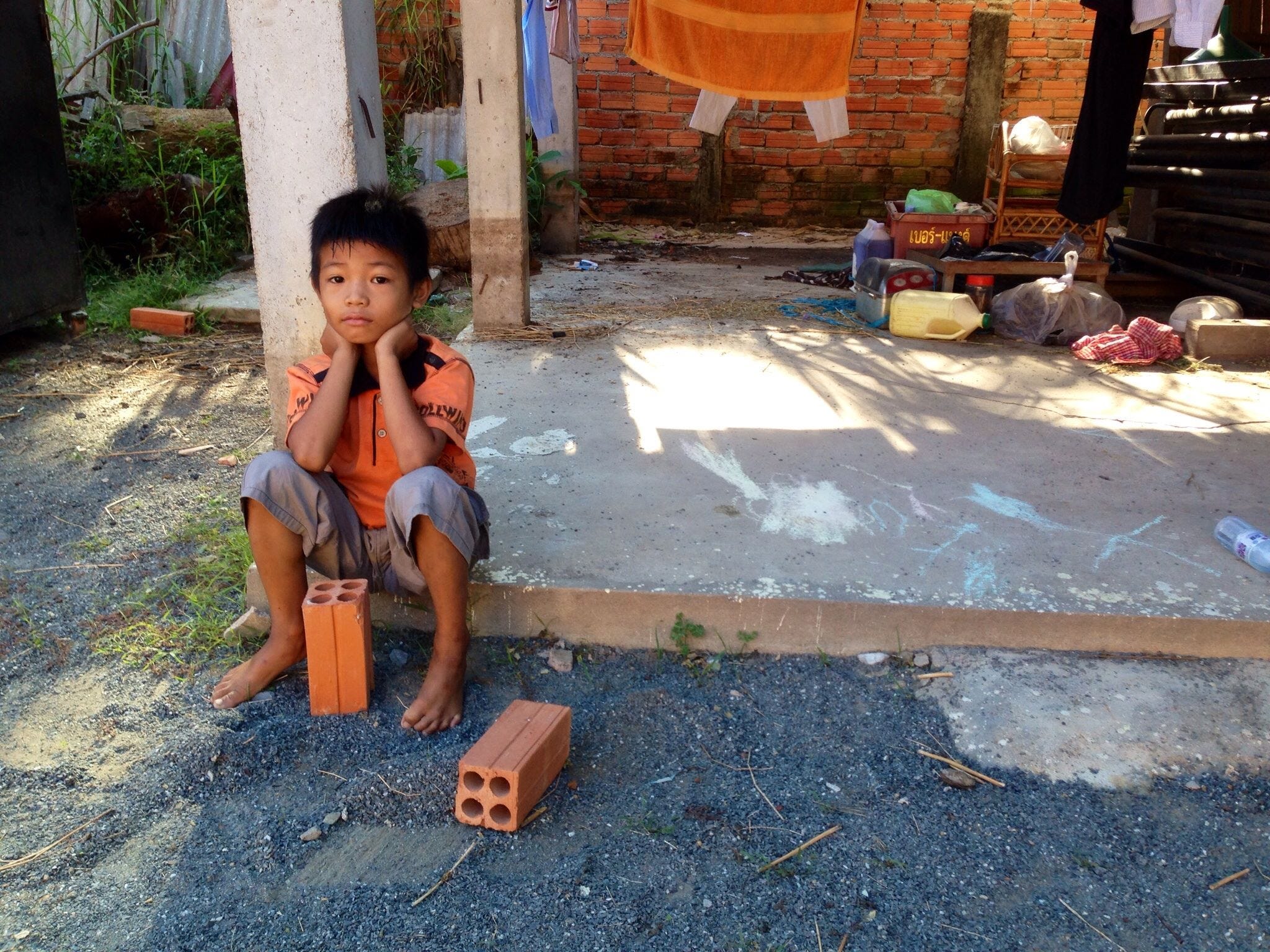
The air was thick. Motorbikes wove between carts piled high with fruit. Chickens pecked at scraps near rusted tin roofs. Children ran barefoot over broken concrete, their laughter echoing above the chaos. And when they smiled, I couldn’t look away. Their teeth were blackened, fronts eaten away by rot. Some had holes so deep they seemed to swallow the entire tooth.
Something inside me lurched. Because I remembered. I remembered standing in my bathroom mirror as a little girl, running my tongue along my own jagged, rotting front teeth. I remembered the shame, the embarrassment, and the quiet awareness that no one was coming to fix it.
My dad had grown up in Taiwan, and when he came to America, he came poor. He worked his way up the hard way — six in the morning until midnight, every day, chasing survival. When I was little he was providing, but he carried the habits of scarcity with him. Every dollar stretched, every need questioned. Doctors were avoided at all costs. Dentists were for people with money to spare. We lived as though we were still in Taiwan in the 1950s, even while standing in suburban America.
I’ll never forget the day my dad looked at me, seven years old, and said, “Call the dentist. Set something up.” I felt helpless. I didn’t know what to say, didn’t know how to begin. So, I didn’t. My teeth kept rotting. That small moment embedded something deep in me: you can’t, you don’t know how, so don’t try.
Years later, I learned there was a name for this: learned helplessness. It forms when you don’t know how to begin and, little by little, that lack of direction becomes a feeling of powerlessness. It becomes a self-fulfilling prophecy. You believe you can’t, so you don’t try. You avoid the risk, the question, the phone call, the next step. And the avoidance convinces you that you really are incapable. The cycle repeats, and over time, powerlessness turns into shame—the fear that something is wrong with you for not knowing how to begin. And from that place, anger and repression aren’t far behind. Breaking that cycle requires more than willpower—it takes a new story, a new vision of what’s possible.
Looking back now, I can see things I couldn’t see as a child. My dad was operating from instincts that had once kept him alive. He had learned to survive by handling everything himself. Asking a seven-year-old to call the dentist wasn’t neglect; it was a man still shaped by a world where children grew up fast and needs were met only if you figured them out on your own. But even the deepest patterns can be unlearned.
I had a turning point in my life (read about it here) that opened the possibility of a new way of living—one where I could take ownership instead of becoming paralyzed and waiting for someone else to decide for me. I still remember one of the earliest moments I practiced that new story. Setting up financial aid and applying to college felt terrifying. Every step felt like a test I wasn’t prepared for. But each tiny action—asking a question, filling out a form, making a phone call—became its own rebellion against the belief that I was incapable. And slowly, the story began to shift. I wasn’t helpless. I had just spent years navigating a world without the love or guidance I needed.
If helplessness shaped the early layers of your story, you don’t have to let it lead the rest of your life.
When you sense powerlessness rising in you, pause and widen the frame. Often what feels like the story is only the first chapter—the part you learned before you had language, support, or choice.
And no matter how strong that old sense of powerlessness feels, know this: You are not helpless. Healing is possible. Growth is possible. A new story is possible.
As you reflect on your own journey, here are a couple questions to help you enter the conversation.
When you find yourself slipping into old patterns of powerlessness, what helps you widen the frame and remember what’s true?
And when you revisit the larger arc of your story, what healing has taken root—compassion, perspective, resilience?
Quick orientation for those who are newer here:
Substack, for me, functions as my home base — part website, part communal blog, part long-form space where I gather the things I’ve been learning. I write often, but I don’t flood inboxes; everyone gets one monthly email. And if you ever want more, you can browse past posts anytime—just tap around the homepage.
A few pieces that might serve you:
Run Like Crazy — a reflection on addiction and the surprising freedom that comes when you finally start running toward the right things.
When the Algorithm Finally Decides You Exist – for those learning to write, share their work, or build a community online. I’m sharing the small, practical things I’m learning as I go.
We Don’t Look at Other People’s Screens — a piece on tech and parenting culture, one practical takeaway you can use immediately, and thoughtful next reads if you want to go deeper.
Galatians and Thessalonian kid discipleship study pdfs — free kid-friendly studies with activities in the back. My kids love them; just this week they asked to play “wobble time tag” again.
And lastly, I’ve been spending a lot of time in Proverbs and 1 Peter. I hoped to have the first few Proverbs kids’ discipleship PDFs ready this month, but about thirty hours in and the nuance is still taking shape. Alongside that, the Uncontainable Identity and Overflow manuscript is moving inch by inch. I’ll share more next month.
Thanks for being here. Your support and encouragement mean more than you know, and I’m grateful to share this space—and these stories—with you.
AJ

I come from a similar background so this hits deep. Thank you for sharing AJ for sharing, this is Precious. And I love how compassionate you are towards your father.
💪💪💪💪